Wine for Dummies: Your Fun Beginner's Guide


Wine is defined as a fermented grape beverage that ranges from bone dry to lusciously sweet, and understanding it does not require a sommelier’s degree. This wine for dummies guide breaks down everything you need to know: the major wine types, easy tasting steps, practical buying tips, and simple food pairing rules. Think of it as your friendly cheat sheet to the wine world. Whether you’re standing confused in a wine shop or staring at a restaurant menu, this guide gives you the confidence to pick something you’ll actually enjoy. Let’s get this wine party started.
What is wine? Types and terminology every beginner needs
Wine falls into five main categories: red, white, rosé, sparkling, and dessert. Each style has its own personality, and knowing the basics helps you zero in on what you like faster.

Red wines are made from dark grapes with the skins left in during fermentation. That skin contact gives reds their color and their tannins. Tannins are the grippy, drying sensation you feel on your gums, like strong black tea. White wines skip the skin contact, which is why they’re lighter and crisper. Rosé is the fun middle child: a short skin contact gives it that pretty pink color and a fresh, fruity character. Sparkling wines like Champagne or Prosecco get their bubbles from a secondary fermentation. Dessert wines are sweet, concentrated, and usually served in smaller pours.
A few key terms will make your life easier right away:
Dry means the wine has little to no residual sugar. It’s not sweet.
Sweet means the opposite. Think Riesling or Moscato.
Body describes how heavy the wine feels in your mouth. Skim milk is light bodied. Whole milk is full bodied.
Acidity is that bright, tart sensation. High acidity wines feel crisp and refreshing.
Tannins are that drying grip in red wines. High tannin wines pair beautifully with a juicy steak.
Grape variety and region shape every bottle. A Pinot Noir from Burgundy tastes different from one grown in California, even though it’s the same grape. The climate, soil, and winemaking traditions all leave their mark. Here’s a quick look at common wine types and what to expect:
Wine type | Flavor profile | Good for |
Cabernet Sauvignon | Bold, dark fruit, high tannins | Red meat, aged cheese |
Pinot Noir | Light, red fruit, earthy | Salmon, mushroom dishes |
Chardonnay | Buttery or crisp, apple, pear | Chicken, creamy pasta |
Sauvignon Blanc | Zesty, citrus, grassy | Salads, seafood, goat cheese |
Rosé | Strawberry, watermelon, dry | Appetizers, light summer meals |
Prosecco | Bubbly, peach, light | Celebrations, brunch |
How to taste wine like a pro using 5 simple steps
Tasting wine like a professional is a skill anyone can develop with focused, attentive practice. You don’t need a fancy cellar or a wine degree. You need five steps and a curious palate.
1. See. Hold your glass against a white background and look at the color. Deep ruby suggests a bold red. Pale gold hints at a light white. The color tells you about the grape, the age, and sometimes the winemaking style. One common myth: the legs on a glass indicate alcohol or sugar content, not quality. Don’t be fooled by pretty streaks.

2. Swirl. Give the glass a gentle swirl. This releases aromatic compounds and opens up the wine’s nose. You’re not showing off. You’re actually doing science.
3. Smell. Bring the glass to your nose and take short, sharp sniffs with brief breaks in between. Long, deep sniffs cause olfactory fatigue, meaning your nose stops registering the aromas. Short sniffs keep your senses fresh. Try to identify fruit, flowers, spice, or earthy notes.
4. Sip. Take a small sip and let it coat your whole mouth. Notice the sweetness, acidity, and tannins. Where do you feel it? Acidity hits the sides of your tongue. Tannins dry out your gums.
5. Savor. Pay attention to the finish. That’s the flavor that lingers after you swallow. A finish lasting 10 or more seconds suggests higher quality and complexity. A short finish means a simpler wine, which isn’t necessarily bad.
Pro Tip: Try the slurping technique. Take a small sip, then draw in a little air over the wine while it’s in your mouth. It sounds ridiculous. It works. The air aerates the wine on your palate and reveals layered flavors you’d otherwise miss.
For a deeper breakdown of what you’re feeling in your mouth, the Blameitonbacchus guide to wine mouthfeel basics explains texture using everyday food comparisons that actually make sense.
How to choose wine without feeling lost in the store
Buying wine gets easy once you know two things: your budget and a wine you already liked. That’s genuinely all you need to walk into a shop and walk out happy.
Everyday quality bottles typically cost between $15 and $25. That price range is your sweet spot for a satisfying, reliable pour without overpaying. Below $15 is hit or miss. Above $25 is for special occasions or when you’re feeling adventurous.
The single most powerful thing you can do in a wine shop is say your budget out loud and describe a wine you’ve enjoyed before. “I liked that red that was kind of fruity and not too dry, and I want to spend around $20” gives a good shop staffer everything they need. Vague is fine. You don’t need the technical vocabulary.
Here are the buying tips that actually matter:
State your budget first. It saves time and guides the recommendation immediately.
Describe flavor, not labels. Say “fruity and light” or “rich and bold,” not “I want a good wine.”
Don’t judge by the label. Pretty labels don’t mean better wine. Neither do heavy bottles.
Ask for the staff pick. Good wine shops rotate staff favorites. These are usually honest recommendations.
Avoid buying occasion wine at the last minute. Rushed decisions lead to overpriced, mediocre bottles.
Pro Tip: If you’re buying for a dinner party and you’re nervous, pick two bottles in your budget range and ask the staff which one they’d drink. You’ll get an honest answer every time.
Basic wine and food pairing anyone can master
Wine pairing sounds intimidating. It isn’t. The core rule is simple: match the weight of the wine to the weight of the food. Light food gets a light wine. Rich food gets a bold wine. That’s the foundation.
Acidity in wine is your secret weapon at the dinner table. High acidity wines like Sauvignon Blanc or Chianti cut through fat and complement acidic dishes like tomato sauce or lemon chicken. The wine and the food lift each other up instead of clashing. Think of it like squeezing lemon over fish. It just works.
Tannins in red wine need protein and fat to shine. Without protein or fat, tannins taste harsh and bitter. With a ribeye or a lamb chop, those same tannins become smooth and satisfying. That’s why Cabernet Sauvignon and steak are the Batman and Robin of the dinner table.
Regional pairings are a reliable shortcut. Italian wines grew up alongside Italian food. Spanish wines evolved next to Spanish cuisine. When in doubt, pair the wine with the cuisine of its home country and you’ll rarely go wrong.
Food type | Wine pairing suggestion | Why it works |
Grilled red meat | Cabernet Sauvignon, Malbec | Tannins bind with protein and fat |
Pasta with tomato sauce | Chianti, Barbera | Acidity matches the dish’s acidity |
Grilled fish or seafood | Sauvignon Blanc, Pinot Grigio | Light body matches delicate flavors |
Creamy dishes | Chardonnay, Viognier | Richness complements richness |
Spicy food | Riesling, Gewürztraminer | Slight sweetness cools the heat |
Cheese board | Sparkling wine, Rosé | Bubbles and acidity cut through fat |
For a full breakdown of pairing strategies, the Blameitonbacchus guide to food and wine pairing walks you through it step by step.
Key Takeaways
Wine appreciation builds fastest when you start with the basics and taste with intention, not anxiety.
Point | Details |
Know your five wine types | Red, white, rosé, sparkling, and dessert each have distinct flavor profiles worth exploring. |
Use the 5-step tasting method | See, Swirl, Smell, Sip, and Savor. A finish over 10 seconds signals higher quality. |
Shop with budget and description | Say your price ceiling and describe a wine you liked to get the best staff recommendation. |
Match weight to weight in pairing | Light wines with light food, bold wines with rich food. Tannins need protein to taste smooth. |
Trust your palate | Wine is subjective. Regular, attentive tasting builds recognition faster than memorizing rules. |
Why I think wine basics are the best gift you can give yourself
Here’s my honest take: most people make wine harder than it needs to be. They memorize grape names, chase scores, and feel embarrassed when they can’t identify a wine blind. That’s the wrong approach entirely.
The fastest way to get better at wine is to taste more, stress less, and pay attention to what you actually enjoy. I’ve seen beginners go from “I don’t know anything about wine” to confidently ordering at a restaurant in a matter of weeks. Not because they studied hard, but because they started using a simple framework and trusted their own reactions.
Describing wines using relatable sensory comparisons speeds up the learning curve dramatically. Comparing a wine’s mouthfeel to whole milk versus skim milk, or its acidity to lemonade versus apple juice, makes abstract concepts click instantly. You don’t need the Latin. You need the analogy.
The other thing nobody tells you: wine tasting is a skill that improves with regular, focused practice. Not daily drinking, but attentive tasting. One glass a week with your full attention beats seven glasses on autopilot. Notice the finish. Notice the texture. Notice what you liked and what you didn’t. That’s the whole curriculum.
— Thomas
Ready to go deeper with Blameitonbacchus?
If this guide lit a spark, Blameitonbacchus has everything you need to fan it into a full flame. The Elements of Wine program is the ideal next step for beginners who want a structured, fun way to build real wine knowledge from the ground up.
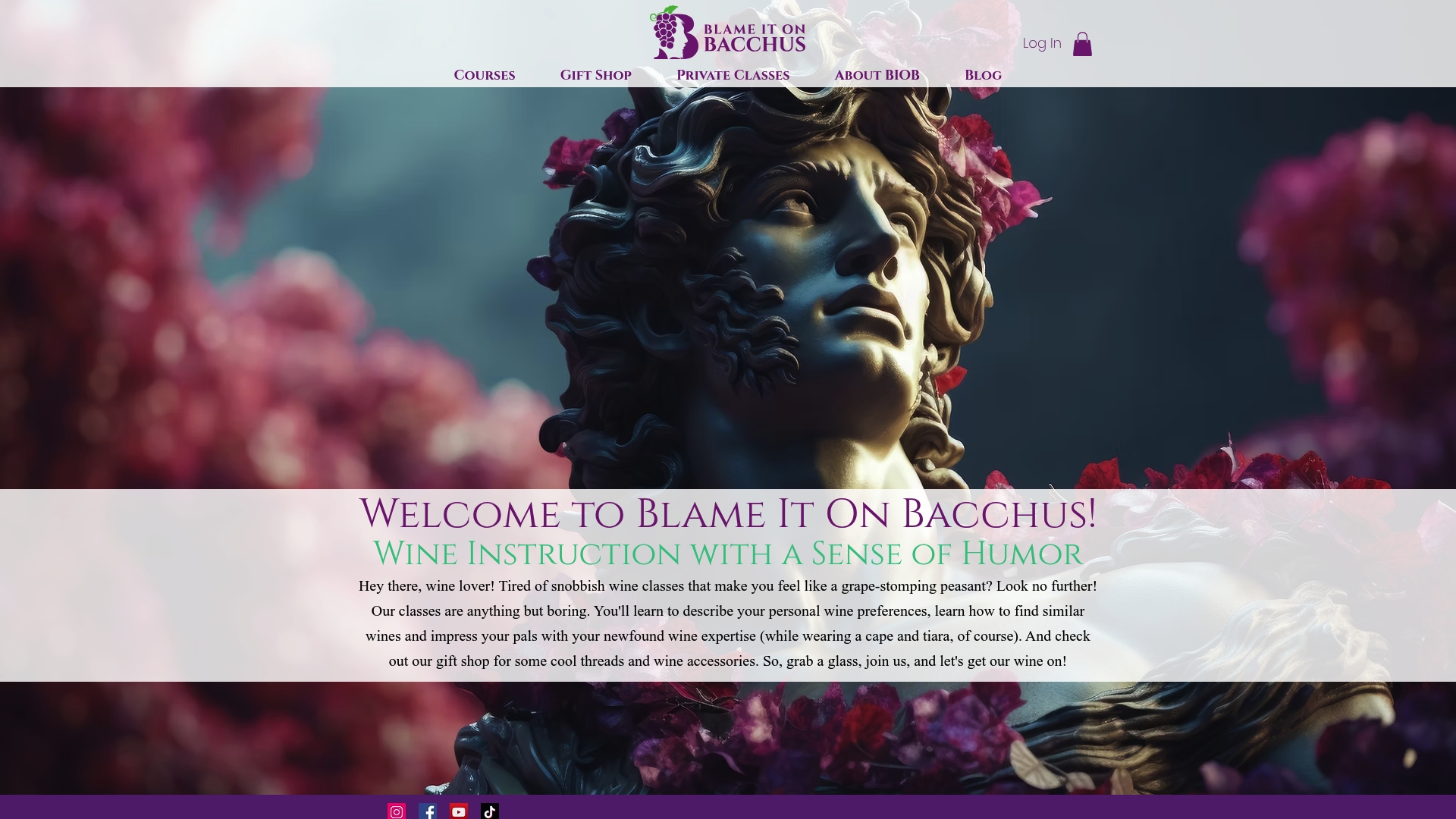
Blameitonbacchus makes wine education feel like a conversation with a knowledgeable friend, not a lecture. The online classes cover tasting, pairing, and buying in plain language, and the wine themed merchandise makes a great gift for any wine lover in your life. No intimidation. No pretension. Just good wine and good vibes.
FAQ
What does “dry” mean in wine?
Dry wine has little to no residual sugar, meaning it does not taste sweet. Most red wines and many whites like Sauvignon Blanc and Chardonnay are dry.
How do I know if a wine is good quality?
A longer finish is the clearest quality signal. A finish lasting 10 or more seconds suggests complexity and quality in the winemaking.
What is the easiest wine pairing rule for beginners?
Match the weight of the wine to the weight of the food. Light wines go with light dishes, and bold wines go with rich, heavy food.
How much should I spend on a good everyday wine?
Everyday quality bottles typically fall in the $15–$25 range. That price point reliably delivers a satisfying bottle without overpaying.
Do wine legs in the glass mean the wine is better?
No. The legs or tears on a wine glass indicate alcohol or residual sugar content, not quality. This is one of the most common beginner misconceptions.
Recommended
Comments