Why Serve Wine Chilled: Temperature, Taste, and Balance


Serving wine chilled is defined as presenting wine within a specific temperature range that optimizes flavor balance, aroma expression, and overall drinkability. Temperature is not a minor detail. It is the single biggest variable you control before the first sip. Serve a crisp Sauvignon Blanc too warm and it tastes flabby. Serve a Pinot Noir at your living room’s 74°F and the alcohol dominates everything. Understanding why serve wine chilled matters means understanding how temperature shapes every sensory experience in the glass. The good news? Getting it right is easier than you think.
Why serve wine chilled: the real reason it matters
Temperature controls how wine molecules behave in your glass, and that changes everything you taste and smell. When wine warms up, ethanol becomes more volatile. That means the alcohol evaporates faster and hits your nose before the fruit, flowers, or spice even get a chance to show up. The result is a wine that smells boozy and tastes harsh. A slight chill slows that process down and lets the good stuff come forward.
Serving wine chilled at the right temperature restores balance by reducing alcohol dominance and enhancing fruit and acidity perception. That is not a small tweak. It is the difference between a wine that tastes like a treat and one that tastes like a mistake. Wine educators describe service temperature as a dial you turn to tune the wine’s character, not a fixed rule you follow blindly.
“Lower temperatures emphasize bitterness and tannins while high temperatures minimize them.” — Jancis Robinson, How to serve wine
This is why sommeliers treat temperature as a tool. A grippy, tannic red served too warm becomes aggressive. The same wine served at 62°F feels structured and food-friendly. Chilling is not about making wine cold. It is about making wine taste like itself.
Pro Tip: If your wine smells more like rubbing alcohol than fruit, it is almost certainly too warm. Pop it in the fridge for 15 minutes and smell it again. You will notice the difference immediately.

What temperature should different wines be served at?
Here is where most people get tripped up. “Room temperature” is the most repeated piece of wine advice in history, and it is also the most misleading. Historic room temperature in European cellars was around 65°F. Modern home interiors run 70 to 75°F or warmer, which is too warm for almost every wine style. That old rule was never meant for your centrally heated living room.
The ideal wine serving temperature varies by style, and the ranges below reflect what WSET and Court of Master Sommeliers guidelines actually recommend.
Wine style | Serving temperature | What you notice |
Sparkling (Champagne, Prosecco, Cava) | 40–46°F | Bubbles stay lively, sweetness stays in check |
Light white (Pinot Grigio, Sauvignon Blanc) | 45–50°F | Bright acidity, crisp fruit, clean finish |
Full-bodied white (oaked Chardonnay, Viognier) | 50–55°F | Richer texture, more aromatic complexity |
Light red (Pinot Noir, Gamay, Barbera) | 55–60°F | Juicy fruit, soft tannins, refreshing finish |
Full-bodied red (Cabernet Sauvignon, Syrah) | 60–65°F | Bold fruit, structured tannins, balanced alcohol |
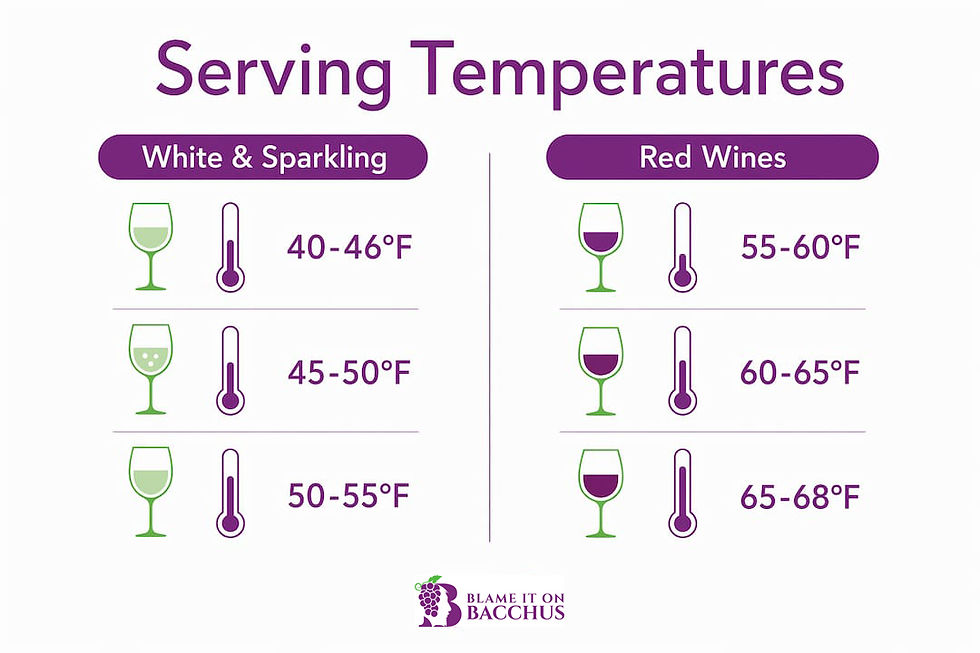
Sparkling wines are best served coldest, around 40 to 46°F, because cold temperatures slow CO2 release and preserve the mousse. Serve a Champagne at 65°F and the bubbles go flat within minutes. That is not a vibe anyone wants.
The light red category surprises most people. Anthony Giglio, wine expert and author, recommends 55°F as a baseline for reds, with lighter styles benefiting from an even deeper chill. A chilled Beaujolais on a summer afternoon is one of wine’s great pleasures. Do not let anyone tell you otherwise.
Pro Tip: Full-bodied whites like an oaked Chardonnay are often served too cold. Pull them from the fridge 10 to 15 minutes before pouring. You will unlock a whole layer of buttery, toasty aroma that stays hidden when the wine is ice cold.
How to chill wine properly at home
You do not need a wine fridge or a sommelier on speed dial. A few simple techniques get you to the right temperature every time.
Use the refrigerator for whites and sparkling wines. Store them in the fridge and pull them out 10 to 15 minutes before serving. This brings them up slightly from fridge temperature (around 38°F) to the ideal serving range.
Use an ice-water bath for fast chilling. Fill a bucket or large bowl with equal parts ice and water, then submerge the bottle for 15 to 20 minutes. Ice-water baths transfer heat far more efficiently than air in a fridge, so they chill a bottle in a fraction of the time. This is the go-to move when guests arrive and the wine is still at room temperature.
Apply the 20-minute rule for reds. If your red wine has been sitting at room temperature, a short fridge chill of about 20 minutes brings it into the optimal serving range without over-chilling. Set a timer so you do not forget it in there.
Warm whites slightly before serving. If a white wine has been in the fridge all day, let it sit on the counter for 10 minutes before pouring. Very cold temperatures suppress aromas, and a slightly warmer white opens up beautifully.
Manage temperature drift during service. Wine warms up fast in a glass, especially in a warm room. Keep the bottle in an ice bucket or a wine cooler sleeve during the meal. Temperature drift after opening is one of the most overlooked problems in home wine service.
For more on getting every detail right, check out Blameitonbacchus’s guide on serving wine perfectly for a full breakdown of beginner-friendly techniques.
Pro Tip: No ice bucket? Wrap the bottle in a wet paper towel and put it in the freezer for 10 minutes. It works surprisingly well in a pinch.
How chilling wine makes food pairing way more fun
Temperature and food pairing are more connected than most people realize. A wine served at the right temperature is simply more food-friendly. Here is why that matters at the table.
Chilling reduces alcohol heat. A red wine served at 74°F tastes boozy and aggressive next to food. The same wine at 62°F feels balanced and lets the food flavors shine. This is especially true with spicy dishes, where hot alcohol makes the heat feel even more intense.
Acidity pops at cooler temperatures. Crisp whites and light reds served properly cold cut through rich, fatty foods like cheese, fried chicken, or creamy pasta. That refreshing contrast is what makes a pairing feel electric rather than flat.
Light reds shine chilled with summer food. A slightly chilled Gamay or Pinot Noir with grilled salmon, charcuterie, or a backyard barbecue is one of the most underrated combinations in casual wine drinking. The chill keeps the wine refreshing and the fruit forward, which plays beautifully against smoky, savory flavors.
Sparkling wines pair wider when served cold. Champagne and Prosecco served at 42°F stay crisp and lively, making them versatile partners for everything from oysters to fried foods to birthday cake. Warm sparkling wine loses the effervescence that makes those pairings work.
Temperature sets the mood. A properly chilled bottle signals care and intention. It makes the occasion feel more special, whether you are hosting a dinner party or just pouring a Tuesday night glass. For more ideas on building a great wine night, the 2026 hosting guide from GirlsHappyHour.com has some genuinely useful tips.
For deeper pairing ideas, Blameitonbacchus has a great resource on wine pairing basics that connects temperature with food compatibility in a really approachable way.
Key takeaways
Serving wine at the correct temperature is the single most impactful thing you can do to improve how it tastes, and most people are getting it wrong by serving reds too warm.
Point | Details |
Temperature controls flavor | Chilling reduces ethanol volatility, letting fruit and acidity lead instead of alcohol heat. |
Room temperature is a myth | Modern homes run 70 to 75°F, which is too warm for nearly every wine style. |
Each style has a sweet spot | Sparkling at 40 to 46°F, light whites at 45 to 50°F, light reds at 55 to 60°F, full reds at 60 to 65°F. |
Ice-water baths work fastest | Equal parts ice and water chill a bottle in 15 to 20 minutes, faster than a fridge alone. |
Temperature drift is real | Wine warms quickly in the glass, so keep the bottle chilled throughout service. |
Thomas’s take: the chill that changed everything
I used to think chilling wine was just for whites and rosé. Reds were for room temperature, full stop. Then someone handed me a glass of Beaujolais that had been sitting in an ice bucket for 20 minutes, and I genuinely could not believe it was the same category of wine I had been drinking for years. It was juicy, bright, and refreshing in a way that felt almost unfair.
The “room temperature” rule is one of those wine myths that sounds authoritative but has not been true for decades. Nobody’s living room is a 19th-century French cellar. Once I started treating temperature as something I could actually control, my enjoyment of wine went up across the board.
My honest advice: get a simple instant-read thermometer, keep an ice bucket handy, and stop being precious about it. A 20-minute fridge chill on a red wine costs you nothing and gives you a noticeably better glass. That is a trade I will take every single time. The slight chill is not about following rules. It is about tasting what the winemaker actually intended.
— Thomas
Learn more with Blameitonbacchus
Ready to take your wine game from guesswork to genuinely good? Blameitonbacchus makes wine education fun, approachable, and completely beginner-friendly.

The private classes at Blameitonbacchus cover everything from serving temperatures to tasting techniques in a relaxed, no-judgment setting. Whether you are hosting a girls’ night, a birthday celebration, or just want to finally understand what you are drinking, these classes deliver real knowledge with a lot of laughs. And if you want to rep your love of wine between sips, the Blameitonbacchus shop has wine-themed gear that makes a great gift for the wine lover in your life.
FAQ
Why does chilled wine taste better than warm wine?
Chilling wine reduces ethanol volatility, which means alcohol evaporates more slowly and lets fruit, acidity, and aroma compounds take center stage. Warm wine amplifies alcohol heat and can make even a good bottle taste harsh and unbalanced.
What is the best temperature for white wine?
Light-bodied whites like Sauvignon Blanc and Pinot Grigio are best served at 45 to 50°F, while full-bodied whites like oaked Chardonnay shine at 50 to 55°F. Serving whites too cold suppresses their aromas, so pulling them from the fridge 10 minutes early makes a real difference.
Should red wine ever be served chilled?
Yes. Light-bodied reds like Pinot Noir, Gamay, and Barbera are best at 55 to 60°F, which is cooler than most modern living rooms. Anthony Giglio recommends a baseline of 55°F for all reds, with lighter styles benefiting from a deeper chill.
How do I chill wine quickly without a wine fridge?
An ice-water bath (equal parts ice and water in a bucket) chills a bottle in 15 to 20 minutes and works faster than a standard refrigerator. For a quick fix, the 20-minute fridge rule works well for reds that have been stored at room temperature.
Does serving temperature really affect wine that much?
Absolutely. WSET and Court of Master Sommeliers guidelines both emphasize temperature windows over fixed points because even a few degrees changes how acidity, tannins, and alcohol register on the palate. Getting the temperature right is the easiest upgrade you can make to your wine experience.
Recommended
Comments