Temperature's Role in Serving Wine: A Full Guide


Temperature is the single most powerful variable in how you experience wine. Get it right, and a $15 bottle can taste like a $50 one. Get it wrong, and even a great Burgundy tastes flat, harsh, or just plain boring. The role of temperature in serving wine goes beyond a simple number on a thermometer. It controls which aromas you smell, how tannins feel on your tongue, and whether the alcohol stays in the background or punches you in the face. Here’s everything you need to know to stop guessing and start pouring with confidence.
What serving temperatures work best for each wine type?
Every wine style has a sweet spot, and the ranges are more specific than most people realize. Recommended serving temperatures by wine style break down like this:
Wine Type | Serving Temperature | Why It Matters |
Sparkling wines (Champagne, Prosecco, Cava) | 40°F–46°F | Keeps bubbles tight and acidity refreshing |
Light-bodied whites and rosés | 45°F–50°F | Preserves freshness without muting fruit |
Full-bodied whites (oaked Chardonnay, Viognier) | 50°F–55°F | Allows creamy texture and complex aromas to open |
Light-bodied reds (Pinot Noir, Gamay) | 55°F–60°F | Keeps fruit bright and tannins soft |
Full-bodied reds (Cabernet Sauvignon, Syrah) | 60°F–65°F | Softens tannins and unlocks deep aromatics |
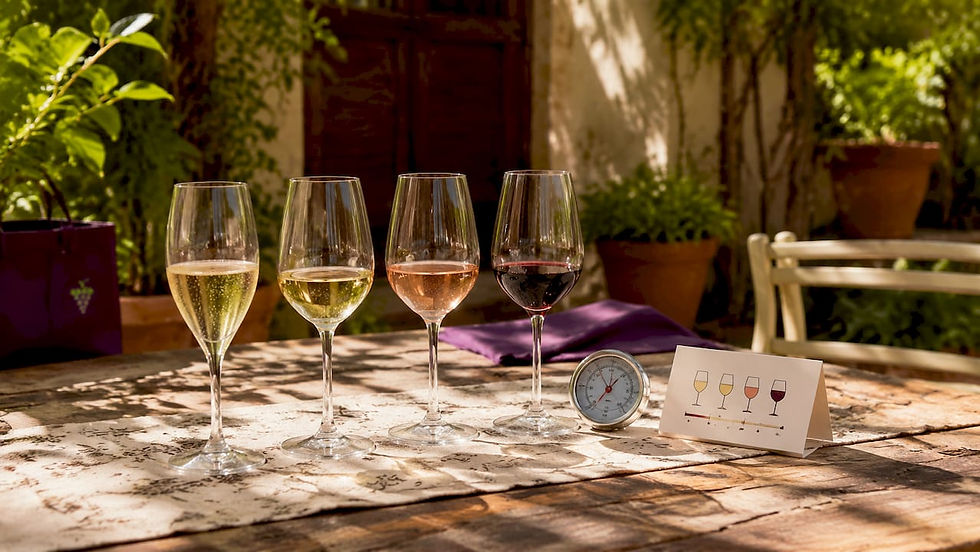
These ranges exist because each wine style is built differently. A bold Cabernet Sauvignon has dense tannins and high alcohol. Serving it at 60°F–65°F lets those tannins relax and the dark fruit flavors come forward. A crisp Sauvignon Blanc has high acidity and delicate citrus aromas. Serving it at 45°F–50°F keeps those aromas lively without letting the wine go flat.
Pro Tip: When in doubt, serve slightly cooler than you think you need to. A chilled wine warms naturally in the glass within 5 to 8 minutes, giving you a better experience as it opens up. A wine served too warm has nowhere to go.
How does temperature affect wine’s aroma, flavor, and structure?
This is where things get genuinely fascinating. Temperature controls the kinetic energy of aroma molecules, which determines how much scent actually reaches your nose. Warmer wine releases more volatile aromatic compounds. Cooler wine traps them.
Here’s what that means in practice:
Too cold: Aromas are muted. A chilled Chardonnay straight from the fridge at 35°F smells like almost nothing. The flavors feel thin and sharp.
Too warm: Aromas go haywire. The alcohol volatilizes faster than the fruit compounds, so you smell heat before you smell anything pleasant.
Just right: The aromatic compounds and the structural elements (acidity, tannins, sweetness) are in balance. You get the full picture the winemaker intended.
Temperature also rewires how your palate reads structure. Cold accentuates acidity, bitterness, and tannins, while warmth softens them. That’s why a Pinot Noir served at 70°F tastes flabby and alcoholic, but the same wine at 57°F tastes bright, silky, and alive. It’s the same wine. Temperature is doing all the work.
“Serving temperature manages the wine’s tension between acidity, fruit, and structure. Cold preserves freshness while warmth unlocks complex aromatics.” — New Zealand Wine Authority
Think of it like a stereo equalizer. Temperature is the dial that boosts or cuts different frequencies. Crank it too high or too low, and the whole mix sounds wrong. Hit the right setting, and everything sings together.
Understanding wine aroma is the next layer on top of this. Once you know how temperature unlocks scent, you start noticing the secondary and tertiary aromas that make a wine genuinely interesting.

Common misconceptions about wine serving temperature
The biggest myth in wine is “serve reds at room temperature.” This advice is outdated by about 200 years. The historical room temperature that old European wine guides referenced was 60°F–65°F, the temperature of an unheated stone cellar or drafty manor house. Modern American homes run at 68°F–72°F. That’s too warm for any red wine, full stop.
A Cabernet Sauvignon served at 72°F tastes alcoholic, jammy, and one-dimensional. The same bottle at 63°F tastes structured, complex, and balanced. The wine didn’t change. The temperature did.
Here’s how to fix your serving habits starting tonight:
Pull your reds out of storage 20 minutes before serving, not hours. If your wine is stored at 55°F in a cellar or wine fridge, give it 20 minutes on the counter to reach 60°F–63°F. Don’t let it sit out for two hours and hit 72°F.
Pull your whites out of the fridge 15 minutes before serving. Whites stored at 35°F–38°F are too cold straight from the fridge. Fifteen minutes on the counter gets them to the 45°F–50°F sweet spot.
Chill your reds briefly if they’re too warm. Pop a full-bodied red in the fridge for 15–20 minutes before serving. This is not weird. This is smart.
Use a warm decanter for cold-stored reds. Pouring a cool red into a room-temperature decanter brings it up to serving temperature quickly and naturally, without any guesswork.
Pro Tip: A chilled white wine gains roughly 7°F in 10 minutes at room temperature. Use that math to your advantage. Pull it out earlier than you think you need to, and let the clock do the work.
The temperature and taste connection runs deeper than most beginners expect. Once you start adjusting your serving temps, you’ll wonder how you ever drank wine any other way.
How to judge wine temperature without a thermometer
You don’t need a wine thermometer to get this right. Your hands and eyes give you plenty of information.
The glass feel test: A properly chilled white wine glass feels cold but not icy. If condensation is dripping down the outside, the wine is probably too cold. If the glass feels room temperature, the wine is too warm.
The pour color check: White wines served too cold look almost water-clear and flat. At the right temperature, they show their true golden or straw color with more visual depth.
The sniff test: Take one sniff before sipping. If you smell almost nothing, the wine is too cold. If you smell mostly alcohol, it’s too warm. If you smell fruit, flowers, or earth, you’re in the zone.
The palm warm: Wrapping both hands around a glass of white wine for 60 seconds raises the temperature by a couple of degrees. This is a perfectly valid technique when your wine is slightly too cold.
Simple home tools also help. A basic instant-read kitchen thermometer works fine for checking wine temperature. Wine thermometers from brands like Peugeot or Vacu Vin clip onto the bottle and give you a continuous reading without any fuss.
Serving temperature is most influential at the exact moment wine enters the glass, not at the bottle or cellar stage. That means your last-minute adjustments matter more than you think. A few degrees in either direction, right before you pour, changes the whole experience.
For a deeper look at temperature control methods, Blameitonbacchus has a full breakdown of practical techniques that work in any home setup.
Key takeaways
Serving wine at the correct temperature is the single most impactful thing you can do to improve how any bottle tastes.
Point | Details |
Temperature controls aroma release | Warmer wine releases more volatile aromatics; cooler wine traps them and mutes the nose. |
Each wine style has a specific range | Full-bodied reds serve best at 60°F–65°F; sparkling wines shine at 40°F–46°F. |
“Room temperature” is a myth | Modern homes at 68°F–72°F are too warm for reds; target 60°F–65°F instead. |
Cooler is safer than warmer | Wine warms naturally in the glass, so starting slightly cool gives you a better window. |
No thermometer required | Tactile and aromatic cues tell you everything you need to know before you pour. |
Why temperature changed how i think about wine
I used to think wine quality was all about the grape or the vintage. Then I poured the same bottle of Côtes du Rhône at 72°F one night and 62°F the next. The first glass tasted hot and one-note. The second tasted like a completely different wine. Spicy, earthy, and genuinely interesting. That experience changed how I approach every bottle.
The mistake I see most often from beginners is treating temperature as an afterthought. People spend $40 on a nice Pinot Noir and then serve it straight off a warm kitchen counter. They wonder why it tastes thin or boozy. The wine is fine. The temperature is the problem.
My honest advice: start with reds. Chill your next bold red for 20 minutes before you open it. Compare it to how you usually serve it. The difference will be obvious enough that you’ll never go back. From there, experiment with whites. Try your Chardonnay at 50°F instead of straight from the fridge. Notice how the texture changes, how the oak and butter notes come forward.
Climate matters too. On a hot summer evening, I serve my reds a few degrees cooler than I would in winter. The ambient temperature in the room affects how fast the wine warms in the glass. Adjust accordingly and trust your palate. There’s no single right answer, just a range worth exploring.
— Thomas
Take your wine knowledge further with Blameitonbacchus
Ready to go deeper than temperature? Blameitonbacchus makes wine education genuinely fun, whether you’re a total beginner or someone who just wants to drink better every night.
The Elements of Wine is the perfect starting point. It covers everything from how serving temperature shapes your experience to the building blocks of flavor, structure, and pairing. Think of it as your friendly, no-intimidation guide to actually understanding what’s in your glass. Blameitonbacchus also offers wine-themed merchandise for every wine lover in your life, because good taste deserves good gear. Come learn, laugh, and pour better.
FAQ
What is the ideal serving temperature for red wine?
Full-bodied reds like Cabernet Sauvignon and Syrah serve best at 60°F–65°F. Light-bodied reds like Pinot Noir are best at 55°F–60°F for brighter fruit and softer tannins.
Does temperature really change how wine tastes?
Yes, significantly. Cold accentuates acidity and tannins, while warmth softens them and releases more aromatic compounds. The same wine at two different temperatures can taste like two completely different bottles.
How cold should white wine be when served?
Light whites and rosés are best at 45°F–50°F. Full-bodied whites like oaked Chardonnay show better texture and complexity at 50°F–55°F. Straight from the fridge at 35°F–38°F is almost always too cold.
How fast does wine warm up in the glass?
A chilled white wine gains about 7°F in 10 minutes at room temperature. That’s why serving slightly cooler than ideal is always the safer strategy.
Can i use a regular kitchen thermometer for wine?
Absolutely. An instant-read kitchen thermometer works perfectly for checking wine temperature. Clip-on wine thermometers from brands like Vacu Vin are also inexpensive and accurate for seafood and wine pairings or any occasion where precision matters.
Recommended
Comments